News

From textile Waste to Value: Why detailed Sorting for Recycling Matters
By Andreas Lehmann Enevoldsen, New-Retex
December, 2025
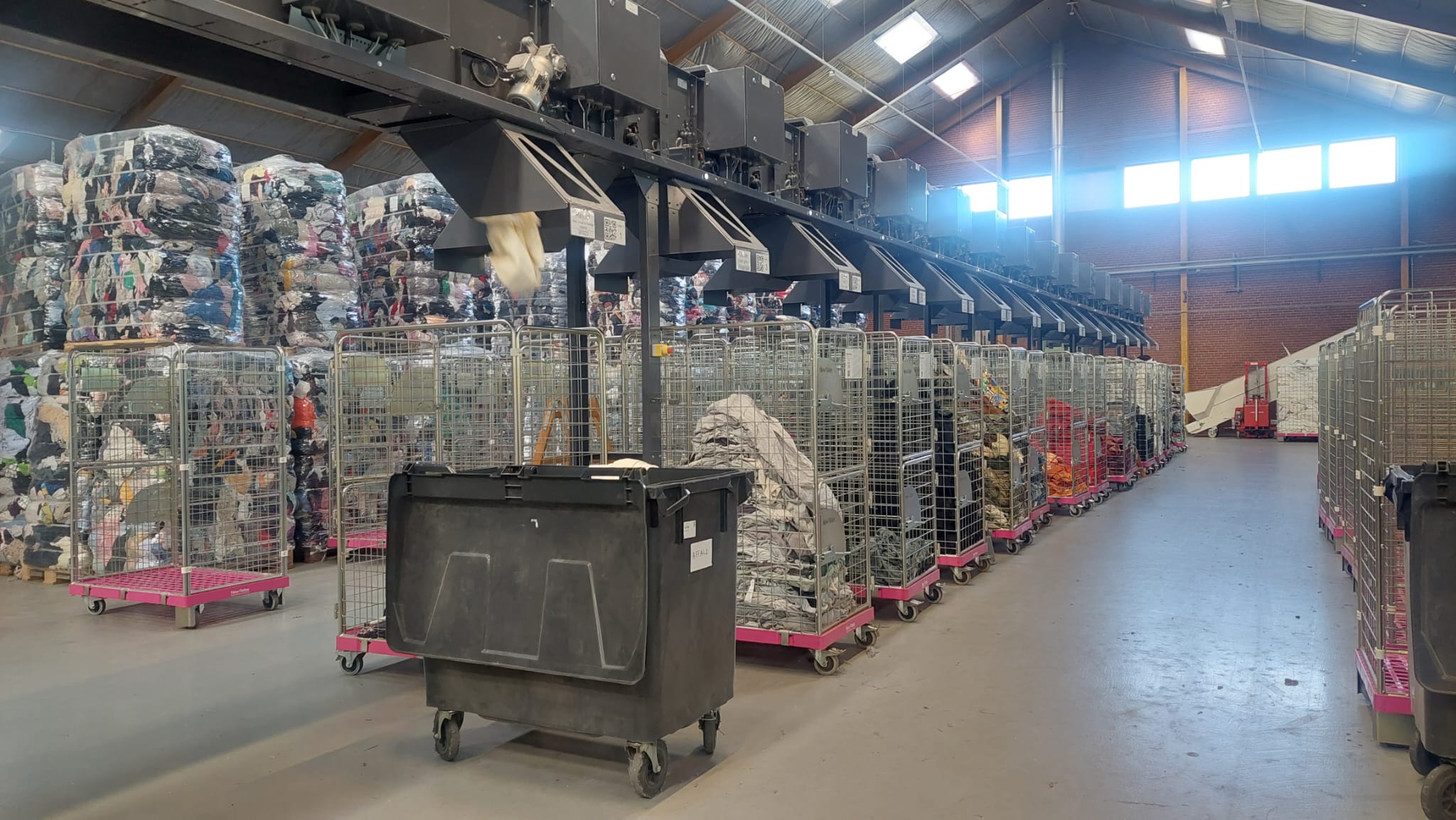
In the journey towards a truly circular textile industry, the initial value creation is not in the recycling plant, but the sorting line. For the STREP project, our ambition is clear: to transform textile waste streams into high-value feedstocks for fibre-to-fibre recycling, by integrating automatic sorting, traceability and recycling technologies. But to realize that vision, we need to tackle one of the most underestimated bottlenecks in the circular textile value chains: accurate, detailed, efficient, and traceable sorting of garments.
The challenge: Textile waste is incredibly complex
While sorting for reuse is important and will remain an important constituent in the circular value chains of textiles, I want to shift the focus towards the non-reuseable textiles – referring to these as the “waste textiles”. On the surface, a garment might look simple but under the hood it almost never is, consider:
- The multitude of fibre types: Cotton, wool, linen, polyester, polyamide (nylon), elastane/spandex, acrylic etc. all require different recycling methods.
- Complex material blends: Many garments are made from two or more fibre types (e.g., cotton/polyester/elastane), and the diversity of blends used in textiles is increasing, which further complicates recycling.
- Surface treatments & finishes: Dyes, coatings (e.g., water-repellent, fire-retardant), laser treatments, printing, etc. interfere with recycling processes.
- Accessories and hard parts: Zippers, buttons, rivets, embroidery threads, labels, etc. need to be accounted for and can influence the recyclability of a garment.
- Colors and contamination: The presence of many colors or leftover stains, or composite textile items (mixed materials) can further limit the recycling options.
With all this complexity in the the textile waste stream, recyclers on the other hand, require homogenous, clean, and cheap input streams to realise value. A few wrongly sorted garments may jeopardise the entire downstream recycling process, and a high cost of the sorted material pushes the margins of the recycler.
Why detailed sorting unlocks value
To solve this, sorting must turn the transform the complex textile waste stream into a wide variety of well sorted fractions, ensuring:
- High degree of detail to realize value potential
Every garment carries multiple layers of information: fibre blend, fabric type, color, finish, accessories, item type, etc. Detailed sorting means recognising and acting on all relevant attributes, so that each textile is directed to its most suitable recycling path. To achieve this high granularity, many different sorting outputs are needed. This high degree of sorting detail allows sorters to extract maximum value from diverse waste streams, effectively creating more value from the textile waste.
- Accuracy to match recycler requirements
The sorted fractions must not only be defined with a high degree of detail considering many parameters at the same time, but they must also be accurately sorted. In other words, the purity of the sorted fractions must be very high. Different recycling technologies have distinct input requirements. For example, mechanical recycling of cellulosic fibres (e.g., cotton) often requires a highly accurate color-sorted input to realize value. Meanwhile, chemical and enzymatic recycling typically require a very accurately defined chemical composition, with strict tolerance to certain contaminants. Without a very accurate sorting, textile waste is unsuited for high-value recycling and ends up being down-cycled (e.g., into insulation), incinerated, or even landfilled
- Cost-efficiency
Efficiency in sorting is not just about speed—it’s about optimizing value per euro spent. By combining automation, sensors, data-driven decision-making, and intelligent matching between input and recycler demand, sorting facilities can process large volumes at lower unit cost while creating maximum value out of the textile waste. The result is a more competitive business case: high-value output without disproportionate operational expense.
- Traceability and smart value chains
STREP’s integrated systems enable traceability from the sorting to recycling process.
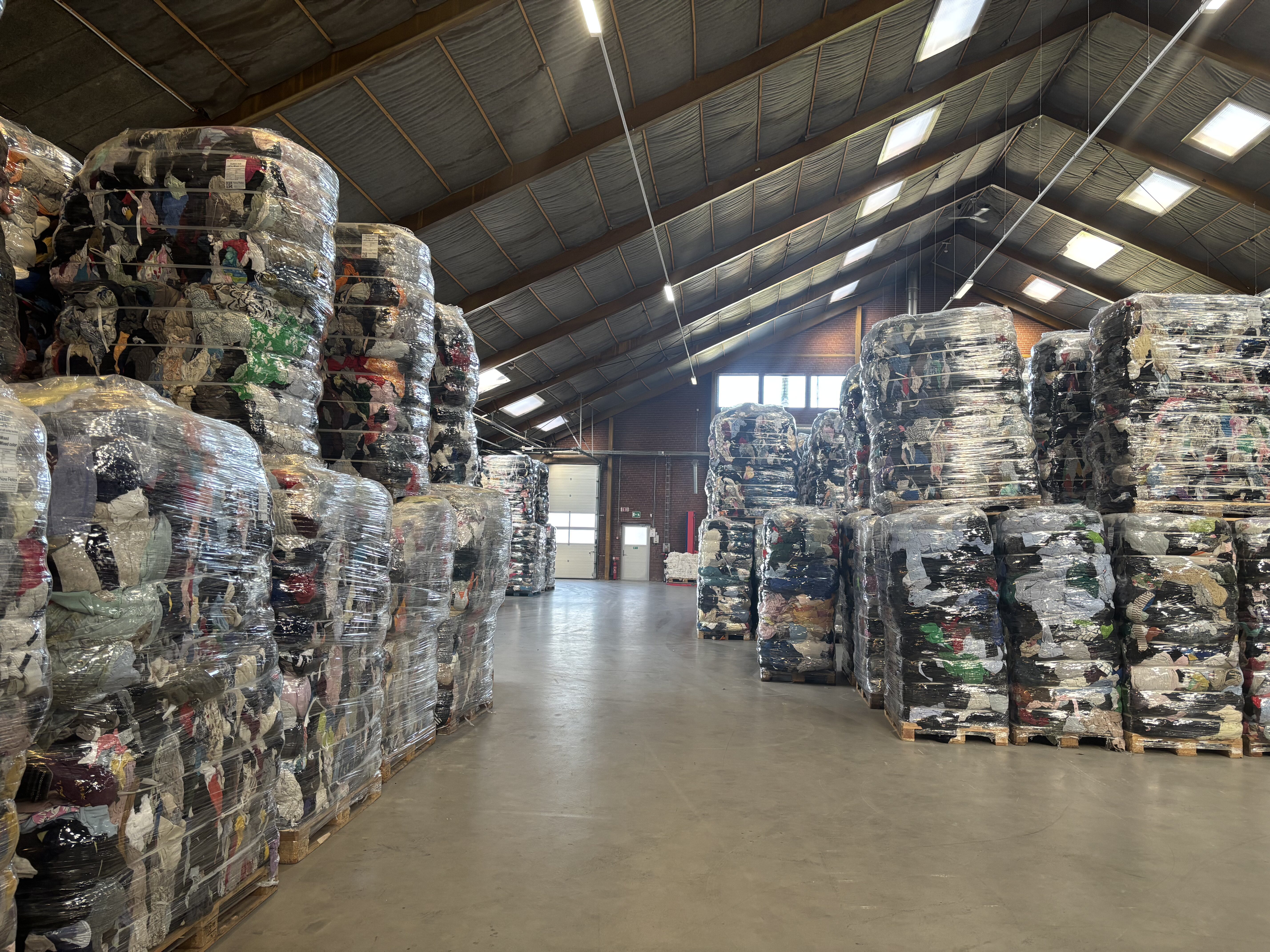
When sorted streams are digitally documented, through machine vision, spectral analysis, and/or digital IDs, each bale becomes a transparent, verifiable resource.
Traceability builds trust across the chain: recyclers can rely on verified composition data, and brands can prove the origin and circularity of their materials.
How do we get there?
In order to scale up textile sorting capacity that ensures: detail, accuracy, cost-efficiency and traceability, some challenges must be overcome. Sorting infrastructures in Europe is still mostly low-tech, labour-intensive, and unable to deliver the granularity and accuracy needed for high-value recycling. Large investments in sorting plants are needed to scale the circular value chain.
To secure investments in automatic sorting plants for textile waste, the business case of sorting for recycling must be improved. Handling textile waste is inherently costly and waste always comes with an environmental and financial price. Meanwhile, recyclers are relying on a very low cost input for their business case to make sense. In other words, the margins are squeezed, and for the business case of a textile sorting for recycling plant to be viable, Extended Producer Responsibility (EPR) systems must play a central role. Well-designed EPR schemes must ensure that fees paid by producers truly reflect the real costs of collection and sorting. This would make cheap, well sorted feedstock available for the recyclers at scale, thereby supporting the development of the circular economy for textiles in Europe.
However, in most of Europe EPR schemes are not yet in place for textiles. So, in the interim, gate fees can serve as an important bridging mechanism, where the industry and municipalities pay the collectors and sorters to handle the textile waste problem. On the other hand, the collectors and sorters must be required to responsibly handle the textiles and document it. Ultimately, fair and effective EPR fee structures are essential to enable investment, ensure cost recovery, and make circular textiles economically sustainable.
A call to action for sorting stakeholders
To realise the full value of textile waste, all parts of the value chain need to embrace sorting as a strategic investment:
- Collectors / Waste management operators should prioritise the detailed, accurate, and traceable sorting of textiles by strategically in investing automatic sorting technologies now.
- Garment manufacturers and brands should design for disassembly, minimise blends and complex finishes to increase the recyclability of textiles. Meanwhile, they should source recycled materials and increase a demand for circular and traceable recycled feedstocks.
- Recyclers should collaborate with sorters to define the exact specifications they need (e.g., 95 % cotton bales, or cotton/elastane <5 % elastane) and reward high-quality sorted streams accordingly.
- Policymakers & funders should provide incentives for sorting infrastructure and standardised sorting classifications (fibre content, color, finishes) so that high-value recycling becomes commercially viable.
- Technology providers should continue developing scalable sorting technologies (spectral imaging, AI classification) that can handle large volumes and complex items with high speed and low cost.
In summary
Automatic sorting is not an optional extra in textile recycling — it is the critical enabler of value recovery. In the context of the STREP project, automatic sorting of textiles is the foundation on which high-quality fibre recovery, traceability, and circular business models are built.
Without it, the complexity of modern textiles (blends, finishes, hard parts) makes recycling far more difficult and less efficient. But with sorting done well, the textiles cease to be waste and instead become resources: valuable, traceable, and ready for reinvention.
By embracing sorting for recycling as a strategic priority today, we can turn the textile “waste streams” into “value streams”.